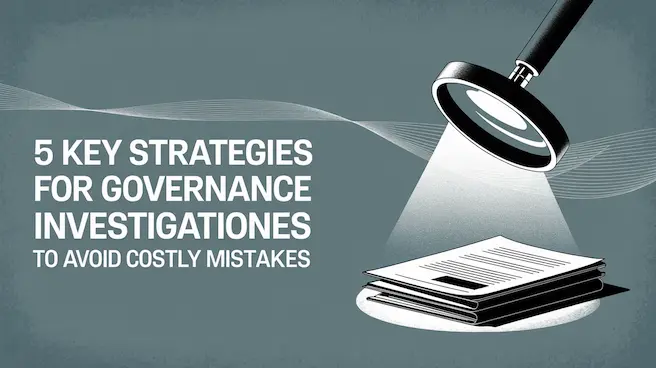
5 Key Strategies for Governance Investigations to Avoid Costly Mistakes
When that official envelope arrives, everything changes.
After forty years in business, I’ve seen the fear that sets in when regulators show up. Midnight calls, sleepless nights, and anxiety loom. One mistake could ruin it all. I’ve helped many leaders during hard times. I know that preparation is the key to survival.
An investigation letter can turn confident leaders into anxious defendants in an instant.
Strategy 1: Immediate Response Coordination
Your accountant is your first line of defense.
As soon as you get an investigation notice, trained accountants prepare communication protocols. They protect your interests while ensuring compliance with relevant regulations. They team up with legal experts, prepare documents, and make timelines. This helps avoid expensive delays. In my experience with major institutions, quick, coordinated responses often shape long-term outcomes.
This rapid approach can mean the difference between cooperation and confrontation.
Strategy 2: Documentation Management and Evidence Preparation
Accountants turn chaos into organized evidence.
Experts gather, organize, and show financial records. This helps meet rules and regulations. They find potential problems before investigators and write narratives to explain the data. I learned that how we share information is as important as the information itself.
Good documentation management shifts your stance from defensive to cooperative.
Strategy 3: Communication Buffer and Technical Translation
Your accountant speaks both languages—business and regulatory.
They act as interpreters, making complex business operations clear to regulators. They handle communication with authorities, keeping emotions in check and maintaining professionalism. In cybersecurity, I’ve found that technical skills help. Good communication also calms tense moments.
This translation keeps you from saying the wrong thing at critical moments.
Strategy 4: Strategic Settlement Negotiation
Experienced accountants know what regulators want.
They use their understanding of regulatory patterns to negotiate favorable terms. They identify areas for compromise and structure payment plans that cut disruption. Knowing when to intervene can be more valuable than learning how to fight.
Smart negotiation through professionals often leads to better outcomes than stubborn resistance.
Strategy 5: Future Compliance Framework Development
Your investigation can lead to stronger business practices.
Forward-thinking accountants use insights from investigations to develop more effective compliance systems. They establish monitoring procedures and audit trails to show their commitment to compliance. I’ve learned that systems thinking can prevent future problems.
The best defense against future investigations is learning from the present ones.
Your Questions for Accountant Selection
When choosing an accountant for regulatory challenges, ask these key questions:
- Can they reply in 24 hours? Can they work together well to succeed?
- Investigation Experience: How many similar cases have they worked on? What were the outcomes?
- Communication Skills: Can they express their ideas clearly to you and to regulators?
- Settlement Expertise: What’s their track record for negotiating favorable outcomes?
- Compliance Enhancement: How do they help prevent future issues?
Your Path Forward
That official letter doesn’t have to mean disaster.
With the proper accounting support, you can turn regulatory investigations into manageable challenges. Expertise applied quickly and strategically can protect your current and future operations. Remember, this is just my view. Always seek professional advice tailored to your specific situation.
Your business’s survival relies on the quality of support you choose today.
Disclaimer: This article reflects personal experience from four decades in business. It is not professional advice. Always consult qualified accounting and legal professionals for guidance tailored to your situation. The author accepts no liability for decisions made based on this content.