7 Critical Workflow Systems That Transform Business Operations for Growing Companies
The Operational Revolution That Sets Winners Apart
While your competitors struggle, you can achieve operational precision.
Every successful business faces a moment when growth strains existing processes. Phones ring more often, orders stack up, and teams rush to maintain quality. Thriving businesses succeed due to effective workflow systems, not luck. They have these systems ready before they need them. Peter Drucker said, “Efficiency is doing things right. Effectiveness is doing the right things.”
This transformation isn’t about being efficient. It’s about establishing a solid foundation to support your business growth. You want to scale up without sacrificing the quality that brought you success.
Southwest Airlines faced a near-collapse, but its systems were key to the recovery.
In the early 2000s, Southwest Airlines faced a crisis due to rapid growth.
The airline was famous for quick turnarounds and excellent customer service. Yet, growth led to significant bottlenecks. Planes stayed grounded longer than expected. Complaints increased, and their edge started to disappear. Leadership chose to improve their workflow systems. They decided against hiring more staff or buying more planes. They integrated ground operations, crew scheduling, maintenance, and customer communication. Teams worked together, not as silos. Former CEO Herb Kelleher said, “We have a strategic plan. It’s called doing things.”
The change was impressive. They didn’t work harder; they worked smarter.
In my 40 years in business, I’ve seen it all—from door-to-door sales to SEO at Disney and Sony. Companies either create systems for success or they lose them. Successful companies, as I learned at Lloyds Bank, view systems as freedom, not limits.
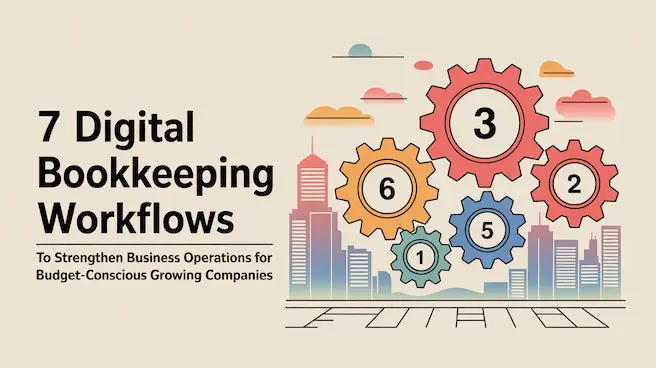
The 7 Critical Workflow Systems Every Growing Business Needs
System 1: Process Documentation and Standardization. Don’t lose knowledge when employees leave. Capture it.
Documenting processes ensures consistency, regardless of who performs the work. Include everything from client onboarding to quality control. Create decision trees for common issues and escalation procedures for exceptions. This leads to predictable outcomes and faster training for new hires. W. Edwards Deming said, “If you can’t describe what you are doing as a process, you don’t know what you’re doing.”
Without documented processes, your business leans on individual knowledge. This makes scaling challenging. I learned this when key employees left my previous company.
System 2: Automated Communication Workflows. Communication chaos kills efficiency faster than anything else.
Set up automated systems that trigger communications based on events or timelines. Client projects should automatically generate updates, and internal processes should activate notifications. This prevents things from falling through the cracks, ensuring stakeholders receive relevant information. At the Ernst & Young Entrepreneur of the Year Awards, I saw that clear communication is vital for smooth operations.
Clear communication builds trust and reduces your team’s workload.
System 3: Resource Allocation and Capacity Planning
Growing businesses face challenges when they are unable to meet their resource needs.
Create systems that track current capacity and forecast future needs. This includes personnel hours, equipment usage, and space requirements. Advanced businesses use dynamic allocation to adjust resources in response to real-time demands. Michael Porter said, “The essence of strategy is choosing what not to do.”
Without capacity planning, you may take on too much work or waste your team’s skills. I’ve seen both happen during times of rapid growth.
System 4: Quality Assurance and Control Mechanisms. Scaling without quality systems can damage your reputation.
Develop multi-checkpoint quality systems that catch errors before they reach clients. Include peer reviews, automated checks, and feedback loops to improve processes. Quality should be an integral part of workflows, not an added extra. As Henry Ford said, “Quality means doing it right when no one is looking.”
Quality systems help protect your reputation and ensure smooth operations as you grow. I learned this while working with large clients, such as Disney.
System 5: Performance Measurement and KPI Tracking. You can’t improve what you can’t measure with precision.
Set key performance indicators that match your goals. Set up tracking systems to track them efficiently. This includes metrics like task completion times, quality scores, and client satisfaction. Create dashboards for immediate visibility into performance trends. Tom DeMarco noted, “You can’t control what you can’t measure.”
These systems enable informed decision-making based on data. They also show where we can improve. I learned this while moving from design to business development.
System 6: Cross-Training and Knowledge Transfer Protocols
When we depend on a single person, it increases the risk in our operations.
Develop cross-training systems to ensure that many team members can manage critical tasks. This includes training programs, mentorship, and regular knowledge sharing. At Kentucky Fried Chicken, everything runs smoothly, no matter who is on duty.
Cross-training protects against disruptions and offers growth opportunities for your team.
System 7: Continuous Improvement Feedback Loops. Old systems can become outdated as your business evolves.
Set up regular reviews to assess the system’s performance. This will help spot areas that need improvement. Gather employee and client feedback, and analyze performance data. Install structured testing to drive improvements across the organization. Toyota’s “Kaizen” philosophy shows that small, consistent changes lead to significant results.
Continuous improvement enables your systems to evolve in tandem with your business. This way, they won’t hold you back. I’ve seen this many times while advising business owners.
Strategic Implementation Questions for Your Business
How will these systems change your experience as a leader? You will feel more confident with predictable operations. This gives you the freedom to focus on strategy.
How will your business improve after these systems are in place? Your team will work with clarity. Clients will receive steady service. This establishes a solid foundation for sustained growth. As Jim Collins wrote, “Good is the enemy of great.”
What happens if you don’t install these systems? Your growth might slow down. Quality can fall when stressed. Competitors will seize market opportunities while you work to catch up.
Consider these implementation questions:
- Which of these seven systems is your most significant vulnerability?
- How could you test one system in a single department first?
- What processes can you document within thirty days?
- Where do communication breakdowns happen most in your operations?
- What quality issues have emerged recently?
- Which team members have critical knowledge that isn’t documented anywhere?
- How do you currently measure operational efficiency, and what gaps exist in your data?
Important Legal and Professional Disclaimer: David White is a business consultant. He focuses on business development and marketing. He is not an accountant and does not recommend accounting practices or professionals. He cannot and does not recommend specific accountants or accounting firms. This article shares strategies and insights from David White’s 40 years in business. They come from his personal experience and observations. These experiences might not fit your business needs. Business situations differ a lot. What worked for David may not be the best approach, effective, or safe for your business.
Before changing your operations or business strategies, consult qualified professionals. This includes business consultants, operational specialists, accountants, or legal advisors. They can assess your situation and provide guidance tailored to your needs. This information should never be your sole basis for making business decisions. David White takes no responsibility for any results, good or bad, from using ideas in this article. Always do your research. Additionally, seek professional advice before making significant business decisions.
For details on David White’s consulting in development and marketing, visit davidwhiteconsulting.com.
Your Operational Symphony Awaits
Remember that moment of chaos we discussed at the beginning? That’s not your destiny; it’s a reflection of your current state.
Great business leaders get that operational excellence isn’t about being perfect. It’s about setting up systems that can adapt and undergo continuous improvement. Instead of reacting to issues like your competitors, you’ll prevent them from happening. You do this by using systematic thinking and strategic action. These seven workflow systems are more than tools. They form the base for sustainable business growth. With them, growth isn’t possible; it’s certain. Over the years, I’ve built businesses, advised others, and faced failures. I’ve learned that success isn’t about avoiding mistakes; it’s about learning from them. Instead, it’s about creating strong systems that learn from those mistakes and adapt.
Your business needs a solid operational approach.